


Entry into the Promised Land: Joshua & Judges
The story of Israel's entry into the Promised Land is found in the books of Joshua and Judges. To learn more, watch the presentation below.

This content requires Flash Player 10 or higher. 
 Lesson Time: 5:39
  Watch Fullscreen
  Download Slides
  Switch to Mobile
Herem in the Old Testament
On of the most controversial subjects in Old Testament scholarship is herem. The term comes from the Hebrew word cherem which means "devotion, ban" or "devoted thing." The related verb means to "utterly destroy."
In the book of Joshua, the Israelites are to "utterly destroy" or devote everything to the Lord when they engage in battles of conquest.
From the perspective of the Old Testament, the purpose of herem is to:
- Drive out or "dispossess" the Canaanites in order to carry out divine judgment on them
- Protect the Israelites from Canaanite religious influence
- Fulfill the promise of land made to the ancestors
The command to place the land and inhabitants of Canaan under herem is given by the Lord:
For it was the LORD's doing to harden their hearts that they should come against Israel in battle, in order that they should be devoted to destruction and should receive no mercy but be destroyed, just as the LORD commanded Moses. (Jos 11.20)
Disobeying the herem command had severe consequences: when Achan takes herem rather than devoting it to destruction (Jos 7.1-8.29), he and his family themselves become devoted to utter destruction.
If you would like to read further about this subject, please read the following article by Old Testament scholar Tremper Longman III. *Note that this article is not subject to the review quiz; it is optional reading.
The Judges
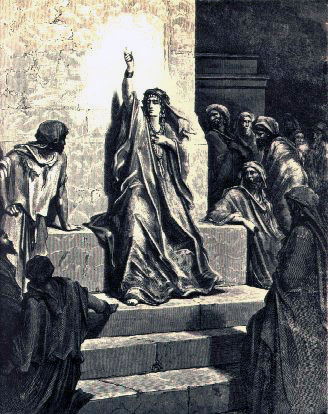 The book of Judges names twelve of these charismatic heroes.
- Othniel
- Ehud
- Shamgar
- Deborah
- Gideon
- Tola
- Jair
- Jephthah
- Ibzan
- Elon
- Abdon
- Samson
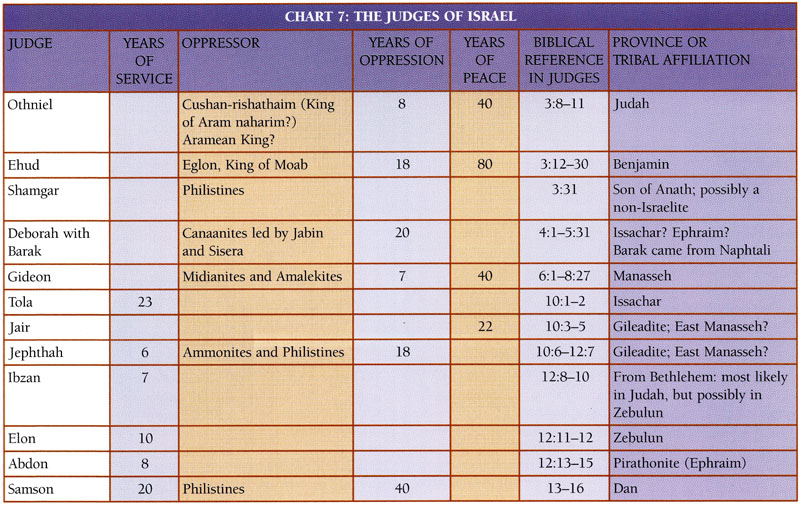
The chart below summarizes the biblical accounts of the twelve judges of Israel.
To hear the stories of Ehud, Deborah, and Jepthah, listen to the clips below.

Speaker: Kathy Maxwell (Pictured)
Ehud
Deborah
Jepthah
The Levite and the Concubine
At the end of the book of Judges (Jud 18-21), matters reach a disturbing low. The storyteller tells of the travels of a certain Levite, and the violent abuse and death of his concubine. The story depicts the severe state of depravity that had beset the people of the land, a condition that leads to conflict among the tribes of Israel and a total disregard for human life. To learn more about this harrowing account, listen to the clip below.
