
The fourth gospel stands apart from the three synoptic gospels. In simplest terms, the gospel of John is about Jesus the Logos, the divine word that becomes flesh.

This content requires Flash Player 10 or higher. 
 Lesson Time: 9:39
  Watch Fullscreen
  Download Slides
  Switch to Mobile

 In very general terms, Matthew and Luke both follow the basic literary structure of Mark. The structure of John, however, reflects a different literary organization. The following outline of John is from Stephen Harris' The New Testament.
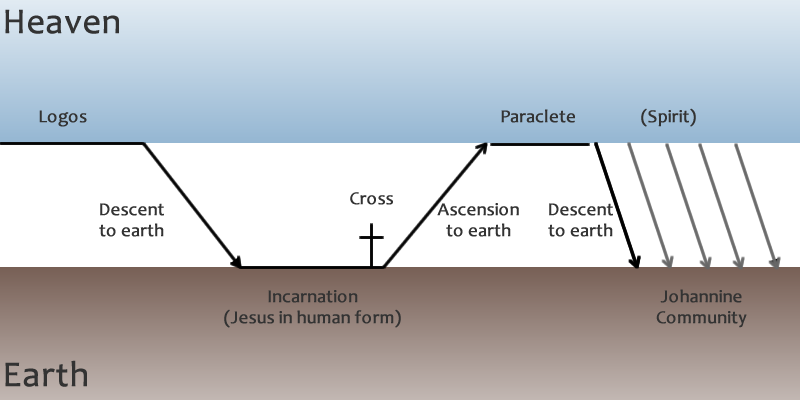
Theologians use the word Christology to identify the ongoing study of the nature of Jesus Christ. The gospel of John plays an important role in New Testament Christology. The image below illustrates John's perspective. John presents Jesus as the divine Logos or word, who exists before creation. Jesus the Logos becomes flesh, or takes on bodily form. The term incarnation denotes the idea of Jesus being God in the flesh, in human form. After the resurrection, Jesus ascends into heaven. The ascension of the resurrected Christ into heaven is followed by the descent of the Paraclete, or "Helper" from heaven. This Paraclete is the Holy Spirit that abides with the community of believers.
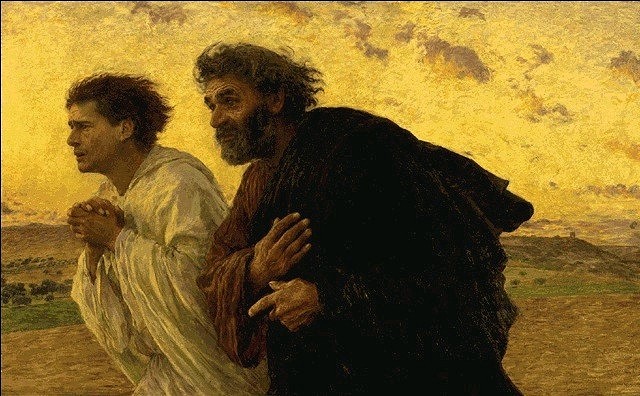
The following video includes a retelling of the resurrection in the gospel of John, and a conversation about the passage by two Yale Professors, Harold W. Attridge and David L. Bartlett. The painting beneath is one of the most vivid New Testament portraits, depicting Peter and John running to the tomb.

Date last modified: October 29, 2012.
eCollege Requirements | Software Update
mobile page